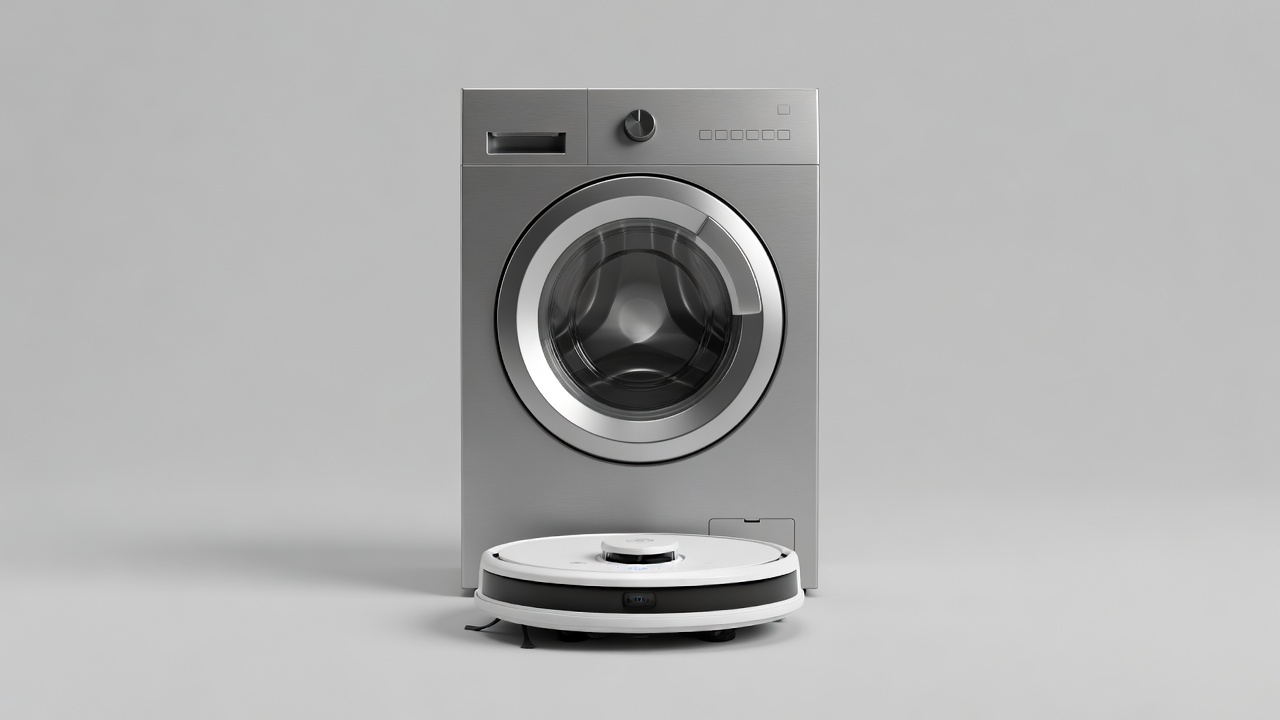
Vacuum boxes shout about motor power and washing machine fascias list dozens of programmes, yet neither tells you much about how clean your floors or clothes will be. This guide separates the measurable from the decorative, so you can shortlist by type first and then by the few specifications that actually change daily results.
Vacuum types compared
| Type | Best for | Watch out for |
|---|---|---|
| Cordless stick | Quick daily cleans, flats, stairs | Boost-mode runtime, small bins, battery replacement cost |
| Corded upright | Large carpeted homes | Weight, awkward on stairs |
| Cylinder (canister) | Mixed floors, allergy households when bagged | Bag prices, hose storage |
| Robot | Daily maintenance between deep cleans | Cables, rugs with tassels, dock bag costs |
| Handheld | Cars, sofas, crumbs | Not a main vacuum |
Specs that predict performance
Air watts, not motor watts. Motor wattage measures power drawn from the socket, not suction delivered. Air watts combine airflow and suction at the cleaner head and are a better indicator, although brands measure them under different conditions. Pascal suction figures vary even more, so treat them as marketing unless tested consistently.
Standardised tests. The IEC 62885 series sets laboratory methods for dust pick-up on carpet and hard floors, crevice cleaning and dust re-emission. When a brand publishes results against these methods, they are worth more than any headline figure.
Battery runtime. Advertised runtimes are almost always measured on the lowest power with a non-motorised tool. Expect a fraction of that on boost with a motorised floor head. Check whether the battery clicks out and what a replacement costs.
Filtration. A HEPA filter only helps if the body is sealed so air cannot bypass it. Look for HEPA H13 to EN 1822 and a "sealed system" claim. Bagged machines release less dust when emptying, which matters for people with asthma.
Brush roll. Anti-tangle combs or conical rolls save the weekly ritual of cutting hair from the bar, which is the most common complaint from pet owners.
Robot vacuums: what separates good from frustrating
Lidar navigation maps rooms reliably in low light and allows no-go zones per room. Camera-based obstacle avoidance helps with socks, cables and pet accidents but raises privacy questions, so check whether images leave the device. Self-emptying docks are convenient but use proprietary bags; price a year's supply. Mopping pads mostly refresh floors rather than scrub them.
Washing machine features worth paying for
- Right-sized capacity: 7–8 kg suits most households of two to four. A bigger drum only saves energy if you fill it.
- Spin-drying efficiency class: shown on the EU/UK label from A to G. Class A leaves the least water in clothes, cutting drying time and dryer energy.
- Inverter brushless motor: quieter, fewer wearing parts, and often covered by an extended motor warranty.
- Auto-dosing: measures detergent per load, reducing waste and residue, particularly in hard water areas.
- Delay-end timer: finishes a cycle when you want it, ideal for off-peak tariffs.
- Noise class: the label shows spin noise in dB with a class from A to D; useful for open-plan homes.
Features that are mostly marketing
Twenty-plus programmes rarely get used; most people rely on four. App control is helpful only for tariff scheduling or remote notifications. "Hygiene" and "allergy" programmes are simply hotter or longer washes your machine can probably do already.
Washer-dryer or separate machines?
Washer-dryers save space but usually dry only around half of their wash capacity, take longer and often use water to condense. If you have room to stack, a separate washer and heat pump dryer is more efficient and means one breakdown does not stop all laundry.
Shortlist method: pick the type that matches your floors or household, then compare only three specs. More specs rarely improve the decision.
Is a more expensive vacuum always better at cleaning?
No. Mid-priced corded cylinders often outperform premium cordless sticks on deep carpet. You pay extra for convenience and weight savings.
Do higher spin speeds damage clothes?
Delicate fabrics prefer lower spins, but most machines let you lower the speed per cycle. A high maximum gives flexibility.